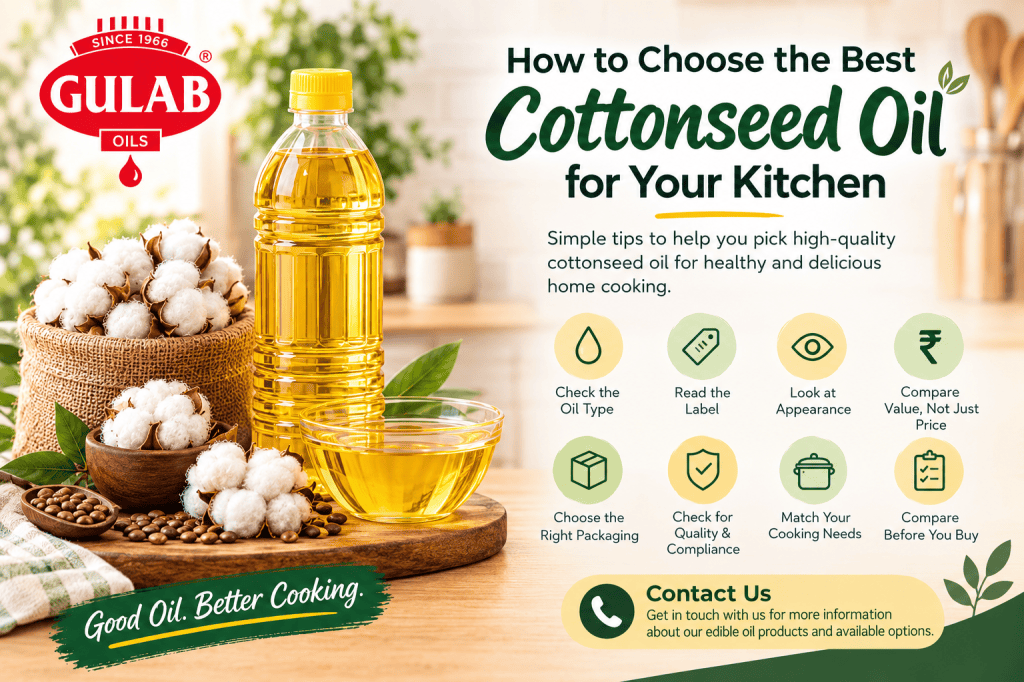
Choosing an edible oil for everyday cooking is not simply about comparing prices. The type of oil, processing method, packaging, labeling, and quality standards can all influence your choice. If you are considering Cottonseed Oil for your kitchen, knowing what to check before purchasing can help you make a more informed decision.
Cottonseed oil is obtained from cotton seeds and is recognized by the Food Safety and Standards Authority of India (FSSAI) as an edible oil. FSSAI’s food-category database lists both cottonseed oil and refined cottonseed oil among edible oils.
1. Check the Oil Type and Processing Method
The first thing to check is exactly what type of oil you are buying. Refined Cottonseed Oil is processed to remove impurities and unwanted components, resulting in a clear oil with a relatively neutral flavor.
When comparing products, don’t rely only on terms such as “pure” or “premium.” Look at the actual product description and label to understand whether the oil is refined and intended for cooking.
For Indian consumers, Kapasia Oil is another commonly used name associated with cottonseed oil. Understanding these terms can make it easier to compare products and avoid confusion while shopping.
2. Read the Label Carefully
A good buying decision starts with the label. Before purchasing, check:
- Product name
- Net quantity
- Ingredients
- Manufacturer or packer’s details
- Batch or lot information
- Manufacturing and expiry/best-before information
- Storage instructions
- Food safety and regulatory information
FSSAI requires edible oils sold in India to comply with applicable food-safety standards and labeling requirements.
For more information about India’s food standards and regulations, you can refer to the official FSSAI product standards.
3. Consider the Oil’s Appearance
Appearance can provide useful clues, although it should not be the only factor used to judge quality.
A properly processed refined oil is generally expected to be clear and free from visible suspended matter. FSSAI’s standards for cottonseed oil specify that it should be clear and free from rancidity, suspended or foreign matter, separated water, added coloring or flavoring substances, and mineral oil.
If you notice unusual particles, an unexpected odor, or signs of spoilage, it is better to avoid using the product.
4. Don’t Choose Only by Price
Price is an important consideration, especially for households that cook frequently. However, the cheapest bottle is not necessarily the best choice.
Instead of comparing price alone, consider the price per litre, packaging quality, product information, processing method, and the manufacturer’s credibility.
A slightly higher price may be reasonable when the product offers better packaging, clear labeling, traceability, and consistent quality.
5. Choose Suitable Packaging
Packaging plays an important role in protecting edible oil from external factors. Look for a properly sealed container without leakage, damage, or signs of tampering.
For regular household use, choose a pack size that matches your consumption. Buying a very large container may not always be practical if your household uses oil slowly.
Once opened, keep the bottle tightly closed and store it according to the manufacturer’s instructions.
6. Look for Quality and Regulatory Compliance
A trustworthy edible-oil product should provide sufficient information for consumers to identify what they are purchasing.
FSSAI’s current product-standard resources include cottonseed oil as an edible oil category, while its regulations establish requirements related to food safety and labeling.
This is where E-E-A-T matters for consumers as well as content creators: reliable information should be based on recognizable food-safety standards rather than unsupported health claims.
7. Think About Your Cooking Habits
The “best” oil can depend on how you cook.
If your kitchen involves regular sautéing, shallow frying, or other everyday cooking methods, consider an oil that fits your preferred cooking style and the manufacturer’s recommended use.
You should also avoid repeatedly reusing cooking oil. Repeated heating can affect the oil’s quality, so used oil should be assessed carefully rather than automatically stored and reused.
8. Compare Before You Buy
Before selecting a bottle of Cottonseed Oil, compare a few important factors:
| What to Check | Why It Matters |
| Processing method | Helps you understand how the oil was produced |
| Label information | Provides product and regulatory details |
| Packaging | Helps protect the oil during storage |
| Price per litre | Makes price comparison easier |
| Manufacturer details | Improves product traceability |
| Best-before date | Helps you choose a fresher product |
| Storage instructions | Helps maintain quality after purchase |
This simple checklist can make grocery shopping easier and reduce the chances of choosing a product based solely on advertising or price.
Final Thoughts
Choosing the best Cottonseed Oil for your kitchen doesn’t have to be complicated. Start by checking the processing method, reading the label, examining the packaging, comparing value rather than just price, and looking for products that comply with applicable food-safety requirements.
Whether you come across the terms Kapasia Oil or Refined Cottonseed Oil, understanding what you are buying can help you make a more confident choice for your everyday cooking needs.
Gulab Oils offers edible oil products for households looking for reliable options for everyday cooking.
Contact Us: Get in touch with us for more information about our edible oil products and available options.


Leave a comment