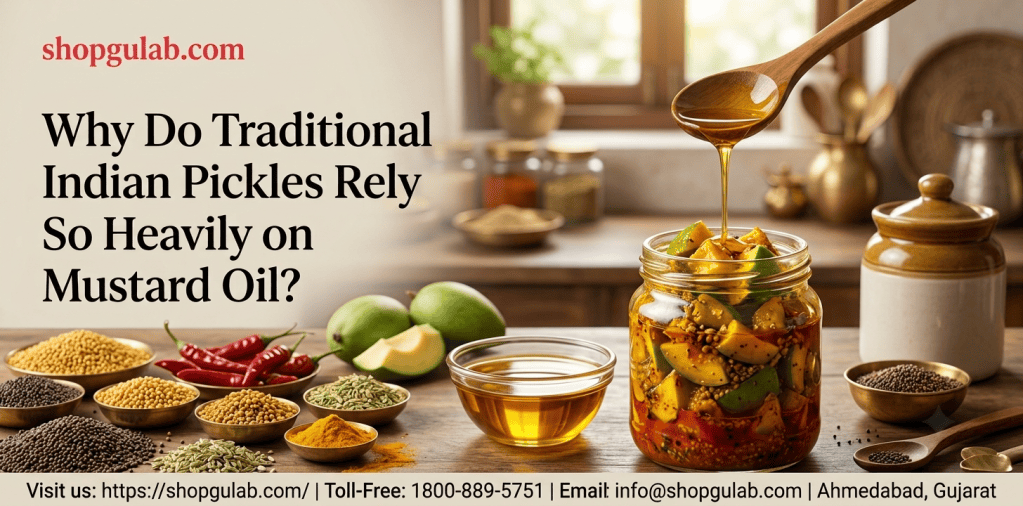
There is a particular moment when a jar of homemade achaar is opened—the sharp aroma of mustard oil rises first, followed by chilli, fenugreek, fennel, or whatever spices went into the recipe. That aroma is not accidental. In many traditional Indian pickles, mustard oil is doing much more than simply adding fat.
From mango and lemon achaar to chilli and mixed-vegetable pickles, mustard oil has become closely associated with the way many Indian households prepare and store pickles. Its strong flavour works with bold spices, while an oil layer can help limit the pickle’s direct exposure to air.
But why mustard oil specifically? And why do many traditional recipes prefer cold-pressed mustard oil?
Mustard Oil Is Part of the Pickle’s Character
Traditional pickles are rarely designed around subtle flavours. They are meant to be tangy, salty, spicy, aromatic, and deeply seasoned. Mustard oil fits naturally into this flavour profile.
Its characteristic pungency gives achaar its unmistakable sharpness. When combined with roasted or ground spices, the oil helps carry those flavours throughout the pickle rather than leaving the spices concentrated in one place.
This is one reason replacing mustard oil with a completely neutral cooking oil can noticeably change the personality of a traditional pickle. The pickle may still work as a preparation, but the familiar mustard-led aroma can be missing.
1. The Strong Aroma Works With Indian Pickling Spices
Think about the ingredients commonly found in a North Indian mango pickle: mustard seeds, fennel, fenugreek, red chilli, turmeric and salt.
Each ingredient brings its own aroma. Mustard oil does not compete with this combination—it reinforces the overall pungent, spicy character.
The result is a flavour that develops rather than simply tasting oily.
For home cooks, this is particularly noticeable when making achaar in small batches. The aroma of the oil, spices, and fruit starts to come together during preparation, and the finished pickle develops a more integrated taste as it matures.
2. Oil Creates a Protective Layer
There is also a practical reason oil is so important in traditional pickling.
In oil-based pickles, the oil forms a covering layer over the ingredients. Indian food-safety regulations have historically specified that oil pickles should be covered with oil, illustrating the important role the oil layer plays in this style of preparation.
However, it is important not to oversimplify this into saying that mustard oil alone “preserves” a pickle. Traditional preservation depends on the overall recipe and process—including salt, acidity, moisture control, cleanliness, drying, and storage.
That distinction matters if you are making homemade achaar. Simply pouring oil over fresh vegetables does not automatically make a pickle shelf-stable.
3. The Oil Helps Carry Spice Flavours
Many pickle spices contain aromatic compounds that are more readily dispersed in fat than in water.
When mustard oil coats pieces of mango, lemon, chilli or vegetables, it helps distribute the flavour of the spice mixture across the ingredients. This is why a well-made pickle can taste more cohesive after it has rested for some time.
A useful kitchen observation is to taste a freshly prepared pickle and then taste it again after the spices and oil have had time to mingle. The difference is often more about integration than simply “more spice.”
4. Why Cold Pressed Mustard Oil Is Popular in Traditional Recipes
For cooks who specifically want a traditional mustard-oil character, cold-pressed mustard oil is often considered because mechanical pressing can preserve a distinctive seed-derived aroma and flavour profile.
But “cold pressed” should not be treated as a guarantee of superior quality or a particular pungency level. Seed variety, raw-material quality, processing conditions, and storage can all affect the finished oil.
Indian food regulations define mustard oil as oil expressed from specified Brassica varieties and set quality parameters for the product.
This is where reading the label becomes more useful than relying only on marketing language.
5. Mustard Seed Variety Can Change the Experience
Not every mustard seed is chemically identical.
Indian mustard (Brassica juncea), for example, has different varieties with different characteristics. ICAR’s work on mustard varieties also demonstrates that seed characteristics can vary substantially, including oil content and glucosinolate levels.
That helps explain why two bottles of mustard oil can have noticeably different aromas, colours, or levels of pungency.
So if your grandmother’s pickle had a particularly sharp mustard character, the difference may not simply be the quantity of oil used. The underlying mustard seed and processing can matter too.
6. Why the Oil Is Often Heated Before Going Into the Pickle
Traditional pickle recipes frequently involve heating the mustard oil before combining it with the ingredients.
The reason is practical as well as culinary. Heating changes the raw, aggressive aroma of mustard oil and gives the cook an opportunity to bring the oil to the desired cooking stage before cooling it for use in the pickle.
The exact method varies from recipe to recipe. Some cooks heat the oil until it reaches a particular stage and then allow it to cool, while others use different approaches depending on the regional style of achaar.
There is no single universal technique for every pickle, so following the recipe’s specific process matters.
7. Why Pickle Makers Care About the Oil Layer
One of the easiest mistakes to make with homemade pickle is thinking that the oil is merely an ingredient to be mixed in.
In many traditional oil-based pickles, the surface oil layer has an important practical role. If pieces of mango, lemon, or vegetables remain exposed above the oil, the preparation may not behave as intended.
FSSAI’s published standards for oil pickles describe oil coverage as part of the product characteristics, including a specified oil layer in the referenced regulations.
For home preparation, this reinforces an old kitchen lesson: keep the pickle ingredients properly coated according to the recipe, and always use clean, dry utensils.
8. Don’t Choose Only by Cold Pressed Mustard Oil Price
When buying oil for pickle making, it is easy to focus on cold-pressed mustard oil price and assume that the cheapest or most expensive bottle tells you something about quality.
Price alone cannot tell you how a mustard oil will taste or perform in a recipe.
Instead, check:
- The product name and ingredient information
- Manufacturing or packing details
- Best-before information
- Packaging condition
- Storage instructions
- Whether the oil suits the flavour profile you want
If you are specifically looking for the best cold pressed mustard oil for an achaar recipe, “best” should be understood in terms of your intended use. A strongly aromatic oil may suit a traditional mango pickle, while someone preparing a milder recipe may prefer a less dominant flavour.
What About Cold Pressed Yellow Mustard Oil?
Cold pressed yellow mustard oil can appeal to cooks who prefer the flavour profile associated with yellow mustard seeds. However, seed colour alone should not be used as a shortcut for judging quality, pungency or authenticity.
The finished oil’s characteristics depend on the raw material and processing, so consumers should look at the complete product information rather than making a decision from colour alone.
A Simple Lesson From Traditional Pickle Making
The continued use of mustard oil in Indian pickling makes sense when you look at the complete process.
It contributes a recognisable aroma, complements assertive spices, helps create the oil-covered environment used in traditional oil pickles, and fits naturally into recipes that rely on salt, acidity, drying and controlled moisture.
That is why mustard oil is not just another cooking oil in many pickle recipes. It is part of the recipe’s identity.
Final Thoughts
Traditional Indian pickles rely heavily on mustard oil because it brings together flavour, aroma and a practical role in oil-based pickling. The familiar sharpness of mustard oil is especially well suited to ingredients such as raw mango, lemon, chilli, garlic and mixed vegetables.
When choosing cold-pressed mustard oil for your own achaar, look beyond price and packaging. Consider the oil’s aroma, product information, processing description, and how well its flavour matches the pickle you want to make.
For mustard oil and other everyday cooking needs, Shop Gulab provides product information to help home cooks make informed choices.
Contact us if you need assistance with product details, availability, or choosing mustard oil for your cooking and pickle-making needs.


Leave a Reply