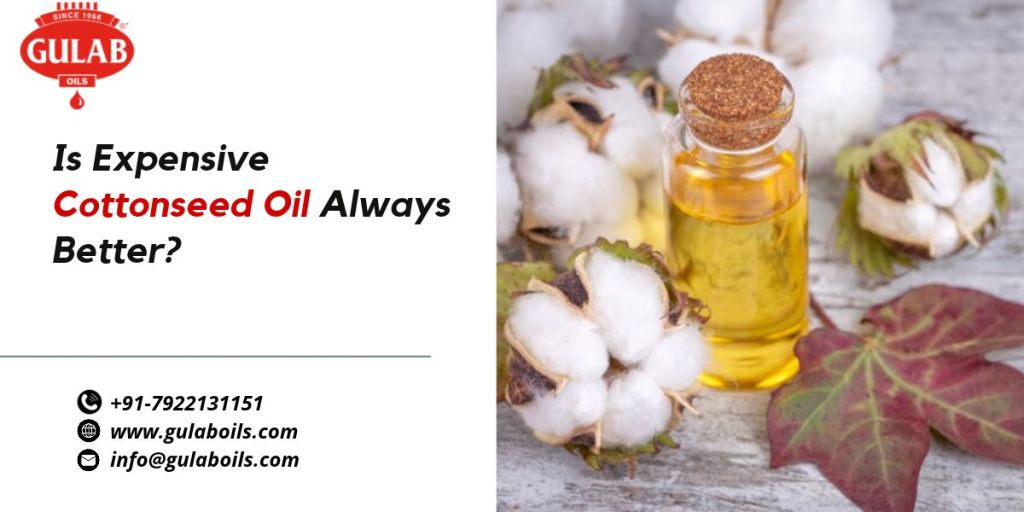
When shopping for cooking oil, it is easy to assume that a higher price means higher quality. But is that always true? Not necessarily. The price of Cottonseed Oil can vary because of factors such as processing, packaging, sourcing, quality controls, brand positioning, and distribution costs. A more expensive bottle may offer certain advantages, but the price alone does not tell you whether it is the right choice for your kitchen.
Understanding what you are actually paying for can help you make a more informed decision rather than choosing an oil simply because it has a premium price tag.
What Determines the Price of Cottonseed Oil?
Several factors can influence the final price of cooking oil.
The first is the cost and quality of the raw material. Cottonseed is a by-product of cotton production, and its oil content and characteristics can vary depending on the seed variety and growing conditions.
Processing also matters. Cottonseed oil intended for food use undergoes processing designed to make it suitable for consumption. According to the Food and Agriculture Organization, naturally occurring compounds such as gossypol and cyclopropenoid fatty acids are important considerations when processing cottonseed for food use. Proper processing and refining significantly reduce these compounds.
Packaging, transportation, testing, storage, and quality-control procedures can also add to the cost. Therefore, two bottles with noticeably different prices may not necessarily have an equally large difference in the actual oil quality.
Does a Higher Price Mean Better Quality?
Not automatically.
A premium price can sometimes reflect better packaging, tighter quality controls, careful sourcing, or additional testing. However, price is not a recognised quality parameter by itself.
For example, Codex standards describe identity and quality characteristics for edible vegetable oils, including cottonseed oil. These standards focus on measurable characteristics rather than simply the selling price.
This is why it is better to look beyond the number printed on the price tag.
When comparing products, check:
- The ingredient and product description
- Whether the oil is intended for edible use
- Processing information
- Packaging quality
- Manufacturing and expiry dates
- Storage instructions
- Batch or traceability information
- Relevant quality or food-safety information provided by the manufacturer
These details give you a more useful picture of the product than price alone.
What About Kapasia Oil?
Kapasia Oil is another name commonly associated with cottonseed oil in parts of India. If you come across this term while shopping, do not assume that a higher-priced product is automatically more refined, pure, or suitable for your needs.
Instead, look at what the label actually says.
The processing method, intended use, and quality information are more meaningful when comparing two products. The name used on the front of the package is only one part of the information you should consider.
Refined Cottonseed Oil: What Should You Look For?
Refined Cottonseed Oil is processed to remove unwanted components and improve characteristics such as flavour, odour and appearance. Food-grade refining is particularly important for cottonseed oil because the raw seed contains naturally occurring compounds that require appropriate processing before the oil is used as food.
The FAO notes that properly processed cottonseed oil has been used as a food product for a long period, while processing plays an important role in reducing naturally occurring compounds of concern.
A useful point here is that refinement does not automatically make an oil “premium” simply because it costs more. The more relevant question is whether the product has been properly processed and meets applicable food-quality requirements.
Why Fatty Acid Composition Matters More Than Price
The composition of an oil can provide more meaningful information than its price.
According to Codex reference data, cottonseed oil has a characteristic fatty acid profile, with substantial amounts of linoleic acid and palmitic acid.
Research also shows that the exact composition of cottonseed oils can vary between cotton varieties and growing conditions. One study examining different cotton genotypes reported differences in fatty acid composition and other physicochemical properties.
This is a good reminder that “expensive” and “high quality” are not interchangeable terms. Quality needs to be assessed through measurable characteristics, processing standards, and product information.
Is Cheap Cottonseed Oil Automatically Poor Quality?
That is also not a safe assumption.
A lower price can result from efficient sourcing, large-scale production, simpler packaging, or lower distribution costs. It does not automatically mean that the oil is inferior.
At the same time, an unusually low price may encourage you to examine the label more carefully. Check whether the product information is clear, whether it is intended for food use, and whether the manufacturer provides adequate quality and traceability information.
The goal is not to choose the cheapest bottle. It is to understand what you are buying.
A Simple Way to Compare Two Bottles
Imagine you are standing in a supermarket with two bottles of cottonseed oil.
One costs considerably more. The other is more affordable.
Instead of immediately choosing the expensive one, compare them side by side.
Step 1: Check the product description.
Understand exactly what type of oil you are buying.
Step 2: Check processing information.
Look for clear information about whether it is refined or processed in another specified way.
Step 3: Check packaging.
Good packaging should protect the oil from factors that can affect quality during storage and transportation.
Step 4: Check dates and batch details.
Manufacturing, best-before, and batch information can help you assess freshness and traceability.
Step 5: Look for quality information.
A transparent manufacturer should provide meaningful product information rather than relying entirely on premium-looking packaging.
Step 6: Then consider the price.
Once the quality-related factors are understood, price becomes a practical comparison point.
This approach makes your buying decision more rational and less influenced by marketing language.
What Does the Research Tell Us About Cottonseed Oil?
Scientific and regulatory sources show why cottonseed oil needs to be evaluated through its composition and processing rather than price.
The FAO reports that cottonseed naturally contains gossypol and certain cyclopropenoid fatty acids, while appropriate processing reduces these compounds to make the oil suitable for food applications.
Codex also provides identity and quality characteristics for cottonseed oil, including requirements relating to factors such as acid value, peroxide value, and characteristic sensory properties.
These measurable characteristics provide a stronger basis for evaluating edible oil quality than simply assuming that a higher retail price equals a better product.
For additional background on international food standards for vegetable oils, you can refer to the FAO/Codex standards for vegetable oils.
How Much Should You Actually Pay?
There is no universal price that automatically represents “good” cottonseed oil.
Your budget, intended cooking use, packaging preference, and trust in the manufacturer all matter. Instead of asking, “Which bottle is the most expensive?”, ask:
“What am I getting for the additional cost?”
If the higher price is supported by clear sourcing, suitable processing, reliable quality controls, better packaging, or useful traceability information, there may be a practical reason for the difference.
If the only obvious difference is premium-looking marketing, a higher price does not by itself prove better oil.
A More Practical Approach to Buying Cottonseed Oil
The smartest way to shop is to treat price as one factor, not the final measure of quality.
Read the label carefully. Understand the type of product. Check processing and storage information. Look at dates and batch details. Consider the manufacturer’s transparency. Then compare the price with similar products.
For Indian households, this approach is particularly useful because cooking oil is a regular grocery purchase. Even a small difference in price can add up over time, while choosing purely based on price may overlook important product information.
Conclusion
So, is expensive Cottonseed Oil always better? No. A higher price may reflect additional processing, packaging, testing, sourcing, or distribution costs, but price alone cannot establish oil quality.
Whether you are comparing Kapasia Oil, Refined Cottonseed Oil, or another cottonseed-based edible oil, focus on the information behind the price. Proper processing, product transparency, packaging, traceability, and measurable quality characteristics provide a much stronger basis for comparison.
Gulab Oils focuses on providing clear product information so customers can understand what they are choosing rather than judging an edible oil only by its price.
If you have questions about our cottonseed oil products, Contact Us for product and purchasing information.


Leave a Reply