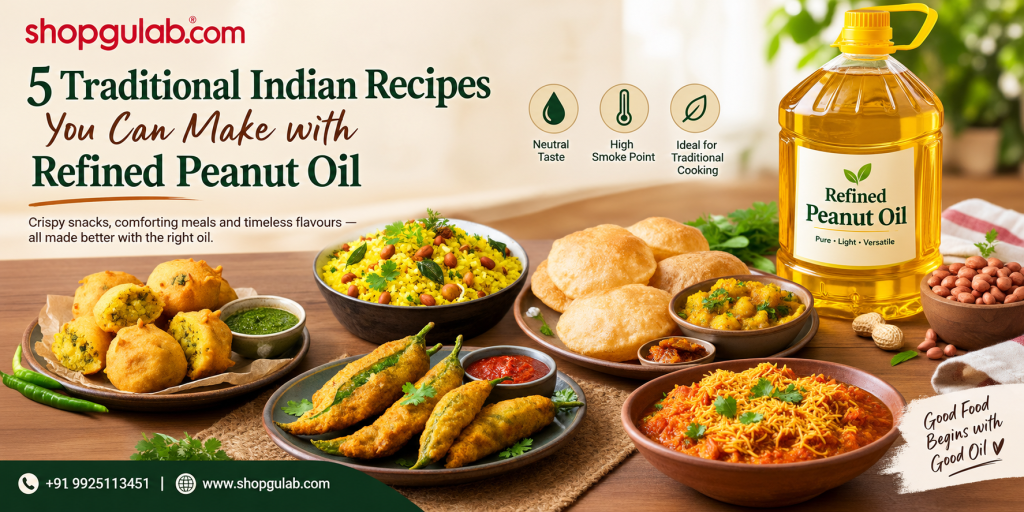
Indian cooking is full of recipes where the cooking oil does more than simply prevent food from sticking to the pan. It can influence how spices bloom, how snacks crisp up, and whether a dish retains its familiar texture. Refined peanut oil, also known as refined groundnut oil, is particularly useful when a recipe involves frying, sautéing, or tempering because of its relatively neutral taste and suitability for high-temperature cooking.
Unlike strongly flavoured oils, refined peanut oil generally allows ingredients such as cumin, mustard seeds, curry leaves, chilli, ginger, and garlic to remain the centre of attention. This makes it a practical choice for many traditional Indian preparations.
If you are planning a family gathering or preparing several batches of snacks, larger packs such as groundnut oil 5 ltr can also be convenient. Here are five traditional recipes where refined peanut oil can fit naturally into the cooking process.
1. Gujarati Batata Vada
Few snacks capture the comfort of western Indian street food like batata vada. The combination of spiced mashed potato wrapped in a gram-flour coating and fried until crisp makes it an excellent recipe for demonstrating how cooking oil affects texture.
Ingredients
- 4 medium potatoes, boiled and mashed
- 1 cup besan
- 2 green chillies, finely chopped
- 1 teaspoon grated ginger
- ½ teaspoon turmeric
- ½ teaspoon cumin seeds
- A pinch of asafoetida
- Fresh coriander
- Salt to taste
- Water as required
- Refined peanut oil for frying
Method
Prepare the potato filling with green chilli, ginger, cumin, turmeric, coriander, salt, and a little asafoetida. Make small balls and keep them aside.
Prepare a moderately thick besan batter. Dip each potato ball into the batter and carefully place it into hot refined peanut oil. Fry in batches until the coating becomes evenly golden and crisp.
Kitchen tip: Avoid overcrowding the kadai. Too many vadas at once can lower the oil temperature and result in a less crisp coating.
2. Batata Poha
Poha is one of those everyday Indian breakfasts that depends on small details. The tempering is particularly important because mustard seeds, curry leaves, green chilli, and peanuts create the flavour base.
Heat a little refined peanut oil in a kadai. Add mustard seeds and allow them to crackle. Follow with peanuts, curry leaves, green chilli, and onion. Add turmeric and the soaked poha, then gently mix everything together.
The neutral character of refined peanut oil works well here because it lets the roasted peanuts and tempering spices remain noticeable rather than adding a dominant oil flavour.
For a traditional Gujarati or Maharashtrian-style breakfast, finish the poha with fresh coriander and a squeeze of lemon.
3. Punjabi Poori with Aloo Sabzi
A plate of hot pooris and spicy potato sabzi is a classic Indian combination, especially for weekend breakfasts and festive meals.
Prepare a firm dough using wheat flour, salt, and water. Divide it into small portions and roll them into discs. Heat refined peanut oil in a deep kadai and fry the pooris one at a time, gently pressing the surface with a slotted spoon so they puff.
The key is temperature control. If the oil is not sufficiently hot, the poori can absorb more oil and become heavy. If it is excessively hot, the outside can brown before the centre cooks properly.
Serve immediately with jeera aloo or another potato-based sabzi.
When making pooris for a larger family, buying 5-litre groundnut oil can be more practical than repeatedly purchasing small bottles, depending on your household’s actual consumption.
4. Rajasthani Mirchi Pakoda
Mirchi pakoda is a simple but satisfying snack made by coating large green chillies with seasoned gram-flour batter and frying them until crisp.
For the batter, combine besan with salt, turmeric, chilli powder, ajwain, and water. Make a thick coating that clings to the chillies. Slit and deseed the chillies according to your preferred spice level, dip them into the batter, and fry in hot refined peanut oil until crisp.
A useful home-cooking trick is to fry at a steady temperature instead of constantly increasing the flame. This helps the batter develop a crisp exterior without turning excessively dark.
Serve the pakodas with coriander chutney or a simple tomato-garlic chutney.
5. Gujarati Sev Tameta Nu Shaak
Not every traditional recipe needs deep frying. Refined peanut oil can also be used for the tempering and sautéing stage of a classic Gujarati sabzi.
Heat a small amount of oil and add mustard seeds, cumin, asafoetida, and green chilli. Once the spices become aromatic, add chopped tomatoes, turmeric, chilli powder, coriander powder, salt, and a little jaggery.
Allow the tomatoes to soften and cook until the mixture becomes slightly thick. Add sev just before serving so it retains some of its texture.
This dish demonstrates an important point about choosing cooking oil: the best option depends on the recipe. For a strongly spiced dish like sev tameta, an oil with a relatively neutral flavour can allow the sweet, tangy, and spicy elements to remain balanced.
Why Refined Peanut Oil Fits These Traditional Recipes
The appeal of refined peanut oil is not simply about frying. It can be useful across several Indian cooking techniques, including shallow frying, deep frying, sautéing, and tadka.
Peanut oil contains both monounsaturated and polyunsaturated fatty acids; USDA FoodData Central provides standardized information on fatty-acid categories and food composition data.
For everyday cooking, however, the amount of oil matters as much as the type. Traditional recipes can be prepared successfully without excessive oil by controlling portions, maintaining appropriate cooking temperatures, and avoiding unnecessary reuse of degraded frying oil.
It is also worth remembering that refined peanut oil and cold-pressed groundnut oil are processed differently. Refined oil is generally lighter in colour and flavour, while less-refined oils retain more of the seed’s characteristic aroma. The choice therefore comes down to the recipe, cooking method, flavour preference, and personal requirements.
For general food-composition information, the USDA FoodData Central database is a useful non-commercial reference.
Buying Groundnut Oil in Larger Quantities
If you regularly prepare fried snacks, poori, pakoda, or festive namkeen, purchasing groundnut oil 5 ltr may make sense for your kitchen. Before buying, check the packaging, ingredient information, manufacturing details, batch information, and best-before date rather than choosing only on the basis of price.
A larger pack should also be stored properly. Keep the container tightly closed and away from direct sunlight and excessive heat. Always use clean, dry utensils when handling cooking oil.
Final Thoughts
From crispy batata vada and mirchi pakoda to everyday poha and Gujarati sev tameta, traditional Indian recipes offer plenty of opportunities to use refined peanut oil in practical ways. Its relatively mild flavour makes it versatile, while proper temperature control helps achieve the texture each recipe demands.
For quality-focused cooking essentials and product information, Shop Gulab can be considered when planning your kitchen requirements.
Reach out to our team for product details, availability, or assistance in selecting a suitable pack for your cooking needs.


Leave a Reply