Cooking oil is a core ingredient in every kitchen, influencing not just flavor but also texture and overall nutrition. Among the many options available today, corn oil has become a widely used choice due to its light taste, versatility, and ability to perform well across different cooking methods. This guide explains what corn oil is, its health benefits, practical cooking tips, and how it compares with other oils.
What Is Corn Oil?
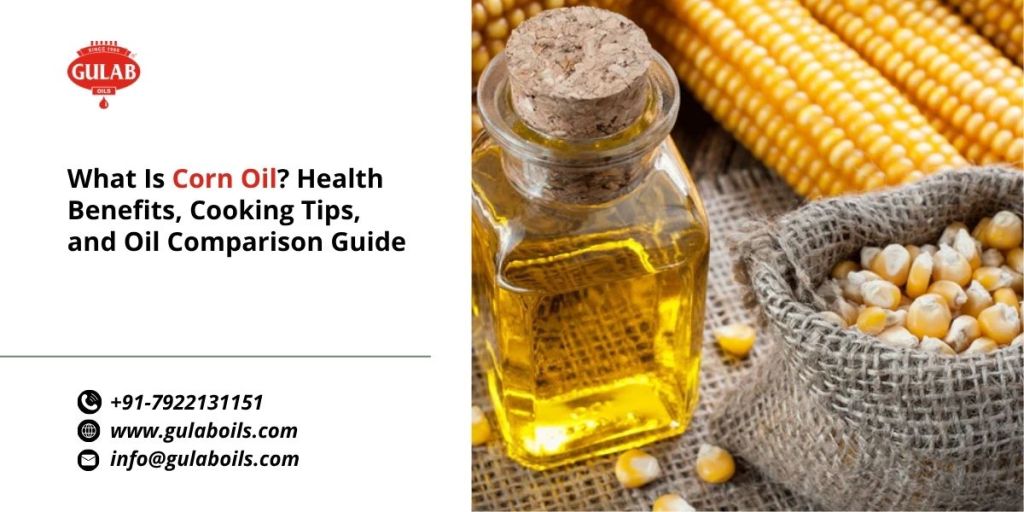
Corn oil is extracted from the germ of corn kernels. It is commonly processed into refined corn oil, which removes impurities and enhances stability for cooking. The result is a clear, light-colored oil with a neutral flavor.
Because of its mild taste and high smoke point, corn oil is suitable for a wide range of cooking techniques, including frying, sautéing, baking, and roasting. It blends easily with spices and ingredients, making it a versatile choice for both Indian and global cuisines.
Nutritional Profile and Health Benefits
Corn oil contains a mix of fats and nutrients that can support overall health when used in moderation.
Key health benefits include:
- Rich in polyunsaturated fats that may support heart health
- Contains vitamin E, which acts as an antioxidant
- Naturally cholesterol-free
- Helps maintain balanced lipid levels when consumed responsibly
The presence of essential fatty acids makes it a useful addition to a balanced diet. However, like all cooking oils, it should be used in controlled quantities as part of a healthy lifestyle.
Why Corn Oil Is Popular in Cooking
Corn oil has gained popularity because of its practical advantages in the kitchen.
Main reasons include:
- Neutral flavor that does not overpower dishes
- High smoke point, ideal for frying and high-heat cooking
- Smooth texture that ensures even cooking
- Versatility across different cuisines
These qualities make it suitable for daily cooking as well as occasional special recipes.
Cooking Tips for Using Corn Oil
Using corn oil correctly can improve both taste and texture in your dishes. Here are some practical tips to get the best results.
Use It for High-Heat Cooking
Corn oil performs well at high temperatures, making it ideal for:
- Deep frying snacks like pakoras and fries
- Stir-frying vegetables and noodles
- Roasting and grilling
Tip: Always preheat the oil before adding food to achieve better texture and crispiness.
Maintain the Right Quantity
Using the right amount of oil is important for balanced cooking.
- Avoid excessive use to prevent greasiness
- Use measured quantities for healthier meals
Tip: A moderate amount helps maintain both flavor and nutritional balance.
Pair It with the Right Dishes
Corn oil works best in recipes where you want ingredients to shine.
Ideal for:
- Curries and gravies
- Rice dishes like pulao and fried rice
- Baked goods such as cakes and muffins
Tip: Its neutral taste ensures that spices and ingredients remain the highlight.
Store It Properly
Proper storage helps maintain the quality of corn oil.
- Keep it in a cool, dry place
- Avoid direct sunlight
- Use airtight containers
Tip: Fresh oil always delivers better taste and cooking performance.
Corn Oil vs Other Cooking Oils
Choosing the right oil often depends on comparing it with other options. Here’s how corn oil stands against commonly used alternatives.
Compared to Cold Pressed Oils
Cold pressed oils are minimally processed and retain more natural nutrients.
- Corn oil is better suited for high-heat cooking
- Cold pressed oils are ideal for low-heat or raw applications
- Corn oil has a milder taste, while cold pressed oils have stronger flavors
Best use approach: Use corn oil for frying and cold pressed oils for light cooking or finishing dishes.
Compared to Sunflower and Soybean Oil
- Corn oil offers a similar high smoke point
- It has a slightly lighter flavor profile
- Performs equally well in frying and sautéing
Best use approach: Corn oil can be used as a versatile alternative for everyday cooking.
Compared to Groundnut Oil
- Both oils are suitable for high-heat cooking
- Groundnut oil has a slightly nutty flavor
- Corn oil provides a more neutral taste
Best use approach: Choose based on flavor preference and type of dish.
When Should You Use Corn Oil?
Corn oil is a good choice in the following situations:
- When preparing fried or crispy foods
- When cooking dishes that require a neutral taste
- When baking or roasting for soft texture
- When you need a versatile oil for multiple recipes
By understanding its strengths, you can use corn oil more effectively in your daily cooking.
Growing Use of Corn Oil in India
The demand for corn oil is increasing as more people explore different cooking oils. With evolving food habits and awareness about cooking techniques, many households are adding corn oil to their kitchens.
Its adaptability, affordability, and ease of use make it a practical option for modern cooking needs. As more brands focus on quality production, consumers have better access to refined and reliable options.
Conclusion
Corn oil is a versatile and reliable cooking oil that fits well into everyday kitchen routines. Its neutral flavor, high heat tolerance, and smooth cooking performance make it suitable for a wide variety of dishes. While it may not replace every other oil, it serves as a strong option for frying, sautéing, and baking.If you are looking for high-quality corn oil that delivers consistent results, Gulab Oils provides trusted solutions designed for modern kitchens. Contact Gulab Oils today to explore premium options and bring better taste and texture to your everyday cooking.


Leave a Reply