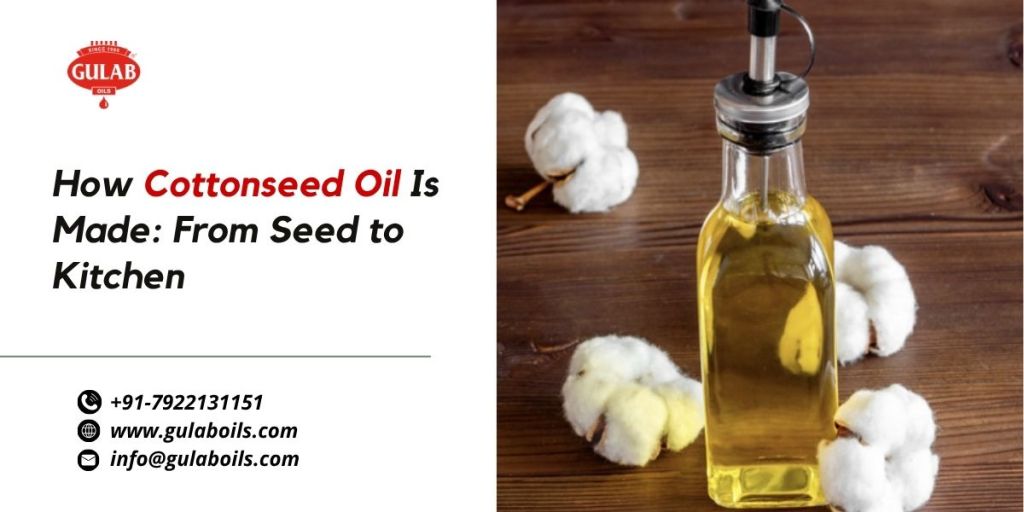
Cottonseed Oil has become a popular edible oil in many households and commercial kitchens because of its light taste, versatility, and cooking performance. While many people use it every day, few know the journey it takes before reaching the kitchen. From harvesting cotton seeds to refining and packaging, every step plays a vital role in producing a safe and high-quality cooking oil.
In this article, let’s explore how Cottonseed Oil is made and why the refining process matters.
What Is Cottonseed Oil?
Cottonseed Oil is an edible vegetable oil extracted from the seeds of cotton plants after the cotton fibers are removed. Since cotton is mainly grown for its fiber, the seeds are a valuable by-product that can be processed into cooking oil.
Today, Kapasia Oil is widely used for frying, sautéing, baking, and preparing a variety of Indian dishes because of its neutral flavor and stability at high temperatures.
Step 1: Harvesting Cotton Seeds
The journey begins in cotton fields where mature cotton bolls are harvested. After separating the soft cotton fibers, the remaining seeds are collected.
These seeds still have an outer coating known as linters. Before oil extraction, the seeds are thoroughly cleaned to remove dust, stones, and other impurities.
Step 2: Removing the Seed Hull
The cleaned cotton seeds pass through a dehulling machine that removes the hard outer shell. The inner kernel contains most of the oil and is the primary raw material used for extraction.
This step improves extraction efficiency and helps produce better-quality Cottonseed Oil.
Step 3: Preparing the Kernels
The kernels are conditioned by adjusting their moisture and temperature. They are then flaked into thin pieces to expose more surface area.
Proper preparation allows maximum oil recovery while maintaining quality throughout the extraction process.
Step 4: Oil Extraction
The prepared flakes undergo oil extraction using mechanical pressing and, in large-scale production, solvent extraction to recover the remaining oil.
At this stage, the crude oil contains natural pigments, waxes, gums, free fatty acids, and other compounds that must be removed before it becomes suitable for cooking.
Step 5: Refining the Oil
The crude oil is carefully processed to produce Refined Cottonseed Oil. The refining process generally includes:
- Degumming to remove phospholipids and gums
- Neutralization to reduce free fatty acids
- Bleaching to eliminate unwanted pigments
- Deodorization to remove odor and improve taste
- Filtration for a clear and clean appearance
These steps help create oil that meets food safety standards while improving its shelf life and cooking performance.
Step 6: Quality Testing
Before packaging, every batch is tested for quality, purity, moisture, acidity, and other important parameters.
Manufacturers also ensure the oil complies with applicable food safety regulations, giving consumers confidence in the final product.
For more information about edible oil quality and food safety, the Food Safety and Standards Authority of India (FSSAI) provides useful guidance on edible oils and food standards.
Step 7: Packaging and Distribution
Once approved, Cottonseed Oil is packed into hygienic bottles, jars, pouches, or bulk containers.
Proper packaging protects the oil from air, light, and contamination during transportation and storage, ensuring it reaches consumers in excellent condition.
Why Refining Is Important
Many people wonder why refining is necessary. The refining process helps:
- Improve taste and aroma
- Remove unwanted impurities
- Increase shelf life
- Enhance cooking stability
- Ensure food-grade safety
This is why Refined Cottonseed Oil is commonly preferred for everyday cooking in homes, restaurants, and food processing industries.
Common Uses of Kapasia Oil
Kapasia Oil is valued for its versatility and can be used for:
- Deep frying
- Stir-frying
- Preparing Indian curries
- Baking
- Commercial food production
- Snack manufacturing
Its mild flavor allows the natural taste of ingredients to stand out without overpowering the dish.
Tips for Storing Cottonseed Oil
To maintain freshness:
- Store the oil in a cool and dry place.
- Keep the container tightly sealed after use.
- Protect it from direct sunlight.
- Avoid exposing it to excessive heat.
- Use clean utensils while handling the oil.
Proper storage helps preserve the quality and extends the oil’s usable life.
Final Thoughts
The journey of Cottonseed Oil from cotton seed to kitchen involves several carefully controlled steps, including cleaning, dehulling, extraction, refining, testing, and packaging. Each stage contributes to producing a safe, reliable, and high-quality edible oil suitable for everyday cooking.
Whether you know it as Kapasia Oil or choose Refined Cottonseed Oil for its cooking performance, understanding how it is made helps you make informed decisions when selecting edible oils for your home.
If you’re looking for premium-quality edible oils, Gulab Oils offers products prepared with a strong focus on quality and consistency. For more information, simply contact us—our team will be happy to help.


Leave a Reply