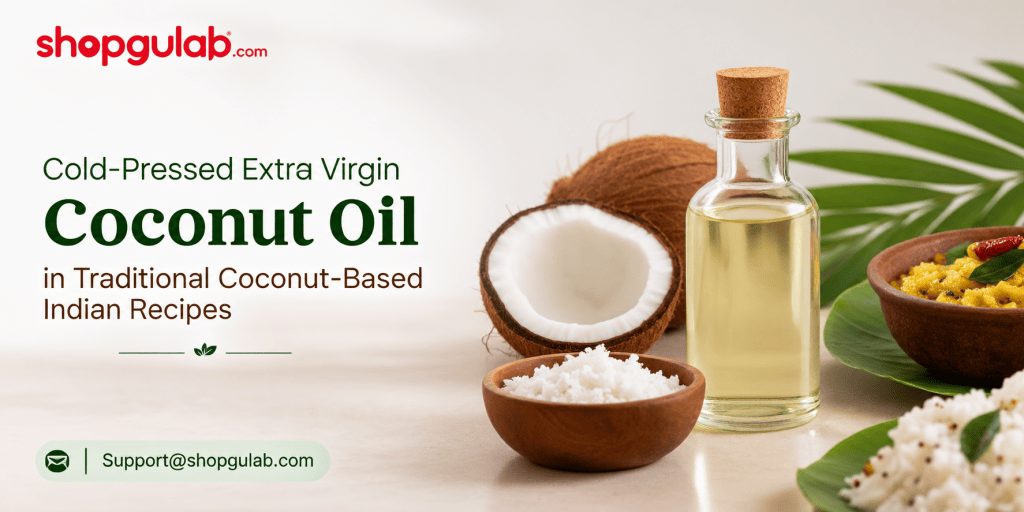
Indian cooking is full of ingredients that do more than simply cook food—they help create its identity. Coconut is one of them. In Kerala and other coastal regions, coconut appears in several forms: freshly grated, ground into pastes, extracted into milk, and pressed into oil. The combination is especially noticeable in traditional recipes where the coconut flavour is meant to be part of the final dish.
That is where cold-pressed extra virgin coconut oil can fit naturally into the kitchen. Its characteristic coconut aroma can complement recipes rather than simply acting as a neutral cooking medium.
Kerala Tourism also highlights the importance of coconut in traditional dishes such as aviyal, thoran, koottukari, puttu, and several coconut-milk-based preparations.
Why Coconut Oil Works So Well With Coconut-Based Recipes
There is a simple cooking principle behind this pairing: similar flavours often work well together.
Imagine making a vegetable thoran with fresh grated coconut, curry leaves and a tempering of mustard seeds. If the cooking oil has a noticeable coconut aroma, it becomes part of the dish’s flavour rather than disappearing into the background.
This is particularly relevant to Kerala-style cooking, where coconut is already used in multiple forms. Traditional dishes can combine grated coconut, coconut milk and coconut oil, creating layers of flavour instead of relying heavily on spice.
A cold-pressed extra virgin coconut oil can therefore be useful when the goal is to retain a recognisable coconut character in the finished recipe.
1. Kerala-Style Avial
Avial is one of the best examples of how coconut and vegetables work together.
The dish typically combines vegetables such as raw banana, drumstick, yam, ash gourd or beans with a coarse coconut-based mixture. Depending on the household and regional style, curd may also be included.
For the finishing touch, a small drizzle of coconut oil with curry leaves can add a distinctly aromatic note.
Cooking tip: Don’t drown the avial in oil. A modest finishing drizzle is often enough. The objective is to accent the coconut and vegetables, not make the dish oily.
2. Vegetable Thoran
Thoran is another recipe where cold-pressed extra virgin coconut oil makes practical culinary sense.
Cabbage, beans, carrot, beetroot and other vegetables can be cooked with grated coconut, green chilli, curry leaves and a simple tempering. The ingredient list may look uncomplicated, but the final aroma depends heavily on how the tempering is handled.
Heat the oil gently, add mustard seeds and curry leaves, and then add the vegetables. Finish with freshly grated coconut.
The result is a dish where the oil’s coconut aroma, toasted spices, and fresh coconut complement one another.
3. Kerala-Style Fish Curry
Coconut-based fish curries demonstrate another side of coconut oil. Here, the oil has to work alongside stronger ingredients such as chilli, turmeric, curry leaves, and tamarind or other souring agents.
Coconut oil is traditionally associated with Kerala cooking, including fish curry and other coastal preparations.
For home cooking, use enough oil to sauté the aromatics without making the curry excessively greasy. Allow the spices to bloom gently before adding the remaining ingredients.
If you are using unrefined coconut oil, remember that its aroma will remain noticeable in the finished dish. That can be an advantage when you actually want the coconut character to come through.
4. Coconut-Based Olan
Olan is a mild Kerala preparation generally associated with ingredients such as ash gourd, cowpeas, and coconut milk.
This is not a dish that needs aggressive spice. Its appeal comes from subtle flavours and a creamy coconut base.
A small amount of organic extra virgin coconut oil can complement that profile, especially when used as a finishing oil with curry leaves.
The key is restraint. When the dish is delicate, too much strongly flavoured oil can overpower the vegetables and coconut milk.
5. Coconut Chutney Tempering
You don’t always need an elaborate curry to appreciate coconut oil.
A basic coconut chutney made from fresh coconut, green chilli, ginger and other ingredients can be transformed by its tempering. Heat a small quantity of coconut oil, add mustard seeds, urad dal, dried chilli and curry leaves, and pour the tempering over the chutney.
That final sizzling layer carries the aroma across the entire bowl.
For everyday cooking, this is one of the easiest ways to introduce cold-pressed extra virgin coconut oil without changing an entire recipe.
6. Puttu and Coconut-Based Breakfasts
Puttu is traditionally made with rice flour and grated coconut and is commonly served with combinations such as kadala curry.
Because coconut is already central to the dish, coconut oil can be used selectively in accompanying preparations rather than added heavily to the puttu itself.
For example, a light coconut-oil tempering in the accompanying kadala curry can provide a complementary aroma without making the breakfast excessively rich.
7. Coconut Rice
Coconut rice is another useful everyday recipe.
Freshly cooked rice can be combined with grated coconut, curry leaves, green chilli, and a simple tempering. Some traditional versions also use coconut milk.
A small quantity of cold-pressed extra virgin coconut oil can help carry the aroma of the curry leaves and spices while reinforcing the coconut note.
For the best texture, avoid adding too much oil. The rice should remain separate and light rather than greasy.
Choosing the Right Coconut Oil for Traditional Recipes
Not every coconut oil will give the same cooking experience.
When buying an oil specifically for coconut-forward recipes, look beyond attractive packaging and check the product information carefully.
Consider:
- Processing method: Look for clearly stated processing information.
- Aroma: Unrefined coconut oils generally retain more characteristic coconut aroma than deodorised refined oils.
- Ingredients: A simple ingredient list makes it easier to understand what you are buying.
- Packaging: A well-sealed bottle helps protect the oil from unnecessary exposure to air, moisture, and contaminants.
- Freshness: Check the manufacturing and best-before information.
- Storage instructions: Follow the manufacturer’s recommendations after opening.
One important point for shoppers: terms such as “virgin,” “extra virgin,” and “cold pressed” should not automatically be treated as interchangeable. Check the actual product description and processing information instead of relying only on front-label wording.
How Much Should You Use?
This is where experienced home cooking matters more than following a rigid measurement.
For a vegetable stir-fry or thoran, start with a small quantity and increase it only if needed. For tempering chutney, a teaspoon or two may be sufficient depending on the quantity being prepared.
The purpose of using cold-pressed extra virgin coconut oil in these recipes is primarily culinary—to complement the ingredients and contribute aroma and flavour.
More oil does not necessarily mean more flavour. In coconut-based cooking, balance is what makes the dish enjoyable.
A Practical Tip for First-Time Users
If you normally cook with a neutral refined oil, don’t replace it everywhere on the first day.
Try coconut oil in one recipe where its flavour naturally belongs—such as thoran, avial, coconut chutney tempering, or a Kerala-style fish preparation.
Taste the finished dish and see how the aroma interacts with the other ingredients. This gives you a much better idea of where the oil works for your household’s cooking style.
For additional background on traditional coconut dishes, the Kerala Tourism guide to coconut dishes provides useful examples of how coconut is incorporated into the region’s cuisine.
What About Organic Extra Virgin Coconut Oil?
Some shoppers specifically look for organic extra virgin coconut oil because they want a product that aligns with their preference for organically produced ingredients.
However, “organic” and “extra virgin” describe different aspects of a product, so they should not be treated as proof of identical quality. Check the product’s certification or supporting information where applicable, along with its processing method and ingredient details.
Similarly, searches for organic India extra virgin coconut oil may return many different products. Compare the actual specifications rather than choosing solely because a product uses the word “organic” prominently in its marketing.
Final Thoughts
Traditional coconut-based Indian recipes are all about balance, and the right oil can make a noticeable difference in aroma and overall flavour. From Kerala-style avial and thoran to coconut chutney and fish curry, cold-pressed extra virgin coconut oil fits naturally into recipes where coconut is already an important ingredient.
For those looking to explore quality coconut oils for everyday cooking, Shop Gulab offers options worth considering based on your cooking preferences and requirements.
For product information or assistance with your purchase, Contact Us.


Leave a Reply